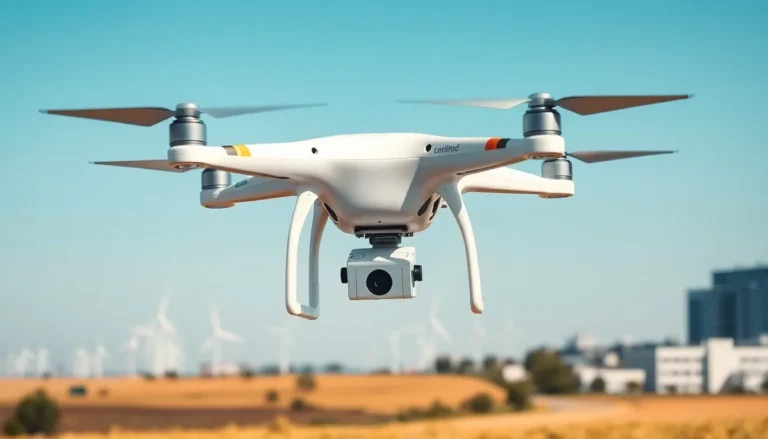


Drone strategies determine whether aerial operations succeed or fail. A well-planned approach saves time, reduces costs, and delivers better results across industries. From agriculture to construction, filmmaking to emergency response, drones have become essential tools for modern businesses and professionals.
But owning a drone isn’t the same as using one effectively. The difference lies in strategy, how operators plan flights, collect data, manage battery life, and stay compliant with regulations. This guide covers the core tactics that separate amateur drone users from professionals who get consistent, reliable results.
Table of Contents
ToggleKey Takeaways
- Effective drone strategies require thorough flight planning, including weather checks, airspace restrictions, and contingency plans before every takeoff.
- Different applications—from agriculture to search and rescue—demand tailored drone strategies with specific equipment, flight patterns, and data collection methods.
- Automated flight paths using software like DroneDeploy or Pix4D improve consistency and efficiency for mapping and inspection missions.
- Commercial drone operators must comply with FAA Part 107 certification, airspace authorizations, and maintain visual line of sight during flights.
- Smart battery management—including proper charging protocols, temperature control, and rotation—directly impacts operational success and extends flight capabilities.
- Data collection requires 70-80% image overlap for accurate 3D mapping, along with clear file management and appropriate processing software.
Understanding Different Types of Drone Applications
Drone strategies vary based on the intended use case. Each application demands specific equipment, software, and operational approaches.
Aerial Photography and Videography
Filmmakers and real estate agents use drones to capture stunning visuals from angles that were once impossible or prohibitively expensive. These operations prioritize camera quality, gimbal stability, and smooth flight paths. The strategy here focuses on timing, golden hour lighting, weather conditions, and location scouting.
Agricultural Monitoring
Farmers deploy drones to monitor crop health, detect irrigation issues, and assess pest damage. Multispectral cameras capture data invisible to the human eye. The strategy involves systematic grid patterns that cover entire fields without gaps or redundant coverage.
Infrastructure Inspection
Power lines, bridges, cell towers, and wind turbines all benefit from drone inspections. These operations replace dangerous manual inspections and reduce downtime. Operators need thermal imaging capabilities and precise hovering control.
Search and Rescue
Emergency responders use drones equipped with thermal cameras to locate missing persons. Speed matters here. Effective drone strategies for SAR operations emphasize rapid deployment, extended flight times, and real-time video transmission to ground teams.
Surveying and Mapping
Construction companies and land surveyors use drones to create accurate 3D models and topographical maps. These applications require high-overlap photography and precise GPS positioning. The data feeds into specialized software that generates actionable outputs.
Flight Planning and Route Optimization
Good drone strategies start before takeoff. Flight planning determines efficiency, safety, and data quality.
Pre-Flight Assessment
Operators should check weather forecasts, airspace restrictions, and site conditions before every flight. Wind speeds above 20 mph challenge most consumer drones. Rain and fog degrade camera performance and create safety hazards.
Route Design
Automated flight paths save time and improve consistency. Software like DroneDeploy, Pix4D, and Litchi allows operators to design missions on a map and execute them automatically. Grid patterns work best for mapping. Orbital paths suit structure inspections. Linear routes handle pipeline and powerline surveys.
Altitude Selection
Higher altitudes cover more ground per image but sacrifice detail. Lower altitudes capture fine details but require more passes. The right choice depends on the mission objective. Agricultural scouts might fly at 400 feet. Building inspectors might hover at 30 feet.
Waypoint Programming
Waypoints mark specific locations where the drone performs actions, take a photo, change altitude, or adjust camera angle. Strategic waypoint placement reduces flight time while ensuring complete coverage.
Contingency Planning
Every flight plan needs a backup. What happens if the drone loses GPS signal? What’s the return-to-home altitude? Where are the safe landing zones? Experienced operators think through failure scenarios before they happen.
Data Collection and Analysis Techniques
Drones generate massive amounts of data. The strategy for handling this information matters as much as the flight itself.
Image Overlap and Resolution
Mapping applications require 70-80% front overlap and 60-70% side overlap between consecutive images. This redundancy allows photogrammetry software to stitch images into accurate 3D models. Lower overlap creates gaps and distortions.
Ground Control Points
GCPs are marked locations with known coordinates. They anchor drone imagery to real-world positions and dramatically improve accuracy. Survey-grade projects might use 5-10 GCPs spread across the site.
Processing Software
Raw drone images need processing to become useful. Options range from free tools like OpenDroneMap to professional platforms like Pix4D and Agisoft Metashape. The choice affects processing speed, output quality, and available analysis features.
Deliverable Types
Different drone strategies produce different outputs:
- Orthomosaics: Geometrically corrected aerial photos
- Digital Surface Models: 3D representations of terrain and structures
- Point Clouds: Dense collections of 3D coordinates
- Thermal Maps: Heat signature visualizations
- NDVI Maps: Vegetation health indicators
Data Management
A single mapping mission can generate hundreds of gigabytes. Operators need clear file naming conventions, backup protocols, and storage solutions. Cloud platforms simplify sharing with clients and team members.
Safety and Regulatory Compliance
Ignoring safety and regulations destroys drone strategies faster than any technical failure.
FAA Part 107 Requirements
Commercial drone operations in the United States require Part 107 certification. Pilots must pass an aeronautical knowledge test and register their aircraft. The certification covers airspace rules, weather factors, and operational limitations.
Airspace Authorization
Many locations fall within controlled airspace near airports. LAANC (Low Altitude Authorization and Notification Capability) provides automated approvals for flights in these zones. Some areas require manual authorization through DroneZone.
Visual Line of Sight
Part 107 mandates that pilots maintain visual contact with their aircraft at all times. Waiver applications allow beyond-visual-line-of-sight operations under specific conditions.
Privacy Considerations
Drone cameras raise privacy concerns. Smart operators inform property owners before flying nearby. They avoid capturing identifiable people without consent. Some states have specific drone privacy laws.
Insurance Coverage
Commercial operators carry liability insurance. Policies typically start around $500 per year for $1 million in coverage. Many clients require proof of insurance before authorizing work on their property.
Incident Reporting
The FAA requires reporting accidents involving serious injury or property damage exceeding $500. Maintaining detailed flight logs helps document operations and supports any required reports.
Maximizing Battery Life and Operational Efficiency
Battery limitations shape drone strategies more than most factors. Smart management extends capabilities.
Understanding Battery Basics
Most drones use lithium polymer (LiPo) batteries. Flight times range from 20-45 minutes depending on the model and payload. Cold weather reduces capacity by 20-30%. Wind resistance drains power faster.
Pre-Flight Charging Protocol
Batteries perform best when charged to 100% shortly before use. Long-term storage at full charge degrades cells. Aim for 60% charge when storing batteries for more than a few days.
In-Flight Conservation
Several tactics extend flight time:
- Fly in calm conditions when possible
- Use sport mode only when necessary
- Minimize hovering and erratic movements
- Remove unnecessary accessories and payloads
- Plan efficient routes that reduce total distance
Battery Rotation
Large projects require multiple batteries. Number each battery and rotate usage evenly. Track charge cycles to identify aging units before they fail during critical missions.
Field Charging Solutions
Remote operations benefit from portable charging stations or vehicle inverters. Solar panels work for extended deployments. Having at least three batteries per drone allows continuous operations while units charge.
Temperature Management
Batteries need warmth to deliver full power. In cold weather, store batteries in insulated bags or near body heat until launch. Avoid charging hot batteries immediately after flight, let them cool first.