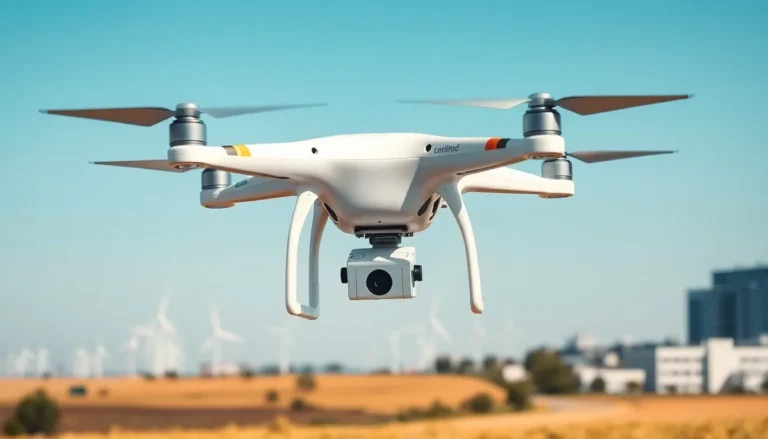
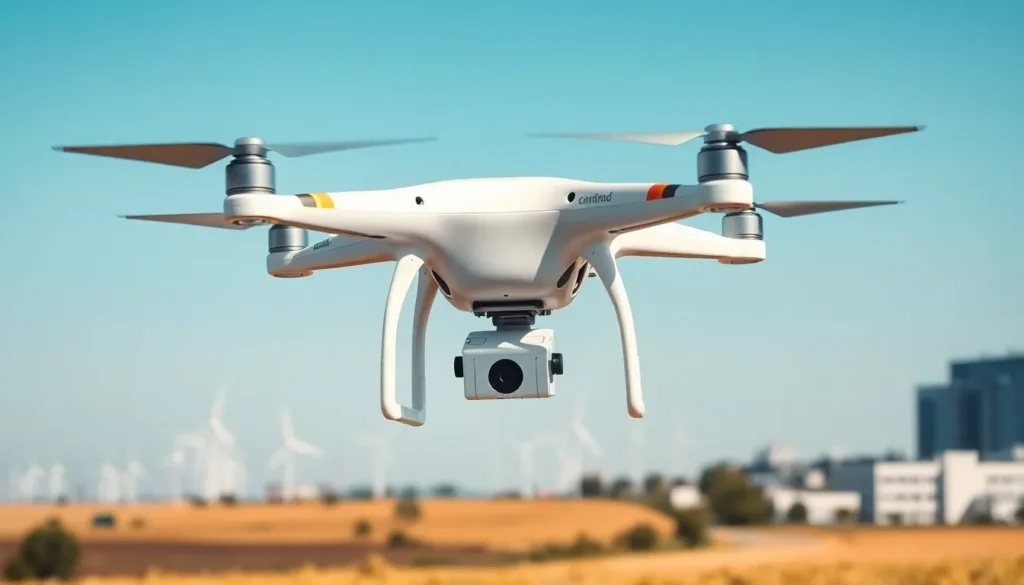

Drones examples span far beyond hobbyist gadgets flying in backyards. These unmanned aerial vehicles now serve critical roles across agriculture, defense, emergency response, and commercial industries. From delivering medical supplies to remote villages to inspecting wind turbines hundreds of feet in the air, drones have become essential tools that save time, reduce costs, and protect human lives. This article explores the most impactful drones examples across major sectors, showing how this technology continues to reshape how industries operate and solve problems.
Table of Contents
ToggleKey Takeaways
- Drones examples span consumer, commercial, agricultural, military, and emergency response sectors—proving their versatility beyond hobbyist use.
- Consumer drones like the DJI Mini series offer 4K cameras and 30+ minute flight times for under $300, making aerial photography accessible to everyone.
- Commercial drones reduce infrastructure inspection costs by replacing dangerous climbs and expensive helicopter rentals with efficient unmanned flights.
- Agricultural drones cut chemical usage by 30-50% through precision spraying and detect crop stress weeks before visible symptoms appear.
- Emergency response drones save lives by delivering medical supplies to remote areas within 30 minutes and locating disaster survivors with thermal cameras.
- The global agricultural drone market alone is projected to exceed $10 billion by 2028, reflecting rapid adoption across industries worldwide.
Consumer and Recreational Drones
Consumer drones represent the most accessible category, and they’ve turned aerial photography into a mainstream hobby. Companies like DJI, Parrot, and Autel dominate this space with products designed for everyday users.
The DJI Mini series offers a perfect example of consumer drones done right. These compact quadcopters weigh under 250 grams, which means they don’t require FAA registration in most cases. They pack 4K cameras, obstacle avoidance sensors, and 30+ minute flight times into a package that fits in a jacket pocket.
Recreational drone pilots use these devices for:
- Capturing vacation footage and travel content
- Real estate photography for homeowners selling property
- Tracking outdoor adventures like hiking, skiing, and surfing
- Racing through custom courses at speeds exceeding 100 mph
FPV (First Person View) racing drones represent another exciting consumer segment. These stripped-down machines prioritize speed and agility over camera quality. Pilots wear goggles that stream live video from the drone’s camera, creating an immersive flying experience.
The recreational drones market generated over $4 billion in global revenue in 2024. That growth reflects how accessible these devices have become, quality drones now start under $300, making aerial photography available to almost anyone.
Commercial and Industrial Drones
Commercial drones examples showcase serious hardware built for demanding professional applications. These machines inspect infrastructure, survey land, and deliver packages where traditional methods fall short.
Infrastructure inspection stands out as a primary commercial use case. Energy companies deploy drones to examine power lines, wind turbines, and solar panel arrays. What once required workers climbing towers or renting helicopters now takes a trained drone operator a fraction of the time. Companies like Skydio build autonomous drones that can navigate complex structures without constant pilot input.
Construction and surveying firms rely heavily on drones for site mapping. A single flight can capture thousands of images that software stitches into detailed 3D models. These models help project managers track progress, calculate material volumes, and identify potential issues before they become expensive problems.
Delivery drones represent the commercial segment’s most visible frontier. Amazon Prime Air, Wing (by Alphabet), and Zipline have all launched drone delivery services in various markets. Wing completed over 350,000 commercial deliveries by late 2024, proving the concept works at scale.
Film and media production also depends on commercial drones. Shows and movies regularly use heavy-lift drones carrying cinema cameras to capture shots that would cost tens of thousands with traditional helicopter rentals.
These commercial drones examples demonstrate how industries are finding practical, cost-effective applications for unmanned aircraft.
Agricultural Drones
Agricultural drones have transformed farming operations worldwide. These specialized aircraft help farmers monitor crops, apply treatments, and maximize yields with precision that ground-based methods can’t match.
Crop monitoring represents the most common agricultural drone application. Multispectral cameras attached to drones capture data beyond what the human eye can see. These sensors detect plant stress, nitrogen deficiency, and disease outbreaks days or weeks before visible symptoms appear. Farmers can then target specific areas rather than treating entire fields.
Spray drones offer another powerful example. The DJI Agras series can carry up to 40 liters of liquid pesticides, herbicides, or fertilizers. These drones apply treatments with centimeter-level accuracy, reducing chemical usage by 30-50% compared to tractor-mounted sprayers. That precision saves money and reduces environmental impact.
Key agricultural drone applications include:
- Field mapping and boundary surveys
- Irrigation system monitoring
- Livestock tracking and management
- Seed planting in difficult terrain
- Pollination assistance for certain crops
In countries like Japan, drone-based crop spraying has become standard practice. The technology proves especially valuable on small, fragmented farms where large machinery can’t operate efficiently.
Agricultural drones examples continue expanding as sensor technology improves and regulations adapt. The global agricultural drone market is projected to exceed $10 billion by 2028, reflecting rapid adoption across both developed and developing nations.
Military and Defense Drones
Military drones represent some of the most advanced unmanned systems ever built. These platforms conduct surveillance, strike operations, and logistics support across active conflict zones.
The MQ-9 Reaper stands as one of the most recognized military drones examples. This large unmanned aircraft can fly for over 27 hours, reach altitudes above 50,000 feet, and carry precision-guided munitions. The U.S. military has deployed Reapers extensively since 2007.
Smaller tactical drones serve different purposes. The RQ-11 Raven, a hand-launched reconnaissance drone, gives ground troops real-time intelligence about nearby threats. Soldiers can deploy these lightweight systems in minutes without specialized equipment.
Recent conflicts have highlighted the impact of commercial-grade drones adapted for military use. Modified consumer quadcopters dropping small munitions have proven effective and inexpensive compared to traditional weapons systems. This shift has prompted military planners to develop both drone capabilities and counter-drone defenses.
Military drone applications include:
- Intelligence, surveillance, and reconnaissance (ISR)
- Precision strike missions
- Electronic warfare and communications jamming
- Logistics and supply delivery
- Search and rescue support
Defense contractors continue developing autonomous swarm technologies. These systems coordinate dozens or hundreds of small drones to overwhelm air defenses or conduct distributed surveillance. The U.S., China, and Israel lead development in this area.
Military drones examples will likely expand further as artificial intelligence enables greater autonomy and decision-making capability.
Emergency Response and Humanitarian Drones
Emergency response drones save lives when traditional methods can’t reach people fast enough. These systems deliver medical supplies, locate disaster survivors, and assess damage in conditions too dangerous for human responders.
Zipline operates the world’s largest drone delivery network focused on humanitarian applications. Their fixed-wing drones deliver blood, vaccines, and medications to remote health facilities in Rwanda, Ghana, Nigeria, and other countries. A facility can receive critical supplies within 30 minutes of placing an order, a delivery that might otherwise take hours by road.
Search and rescue operations increasingly rely on drones equipped with thermal cameras. These sensors detect body heat signatures even through foliage or in low-visibility conditions. In 2024 alone, drones assisted in hundreds of successful rescues across mountainous terrain, wilderness areas, and disaster zones.
Disaster assessment represents another critical application. After hurricanes, earthquakes, or floods, drones quickly survey affected areas and identify where help is needed most. This aerial perspective helps emergency managers allocate resources effectively and identify survivors who might otherwise go unnoticed.
Additional emergency drone applications include:
- Delivering life preservers and flotation devices to drowning victims
- Transporting automated external defibrillators (AEDs) for cardiac emergencies
- Providing communication relay in areas with damaged infrastructure
- Monitoring wildfires and directing firefighting resources
These humanitarian drones examples prove the technology’s potential to address urgent human needs. Organizations like UNICEF and the World Health Organization now integrate drones into their emergency response planning.