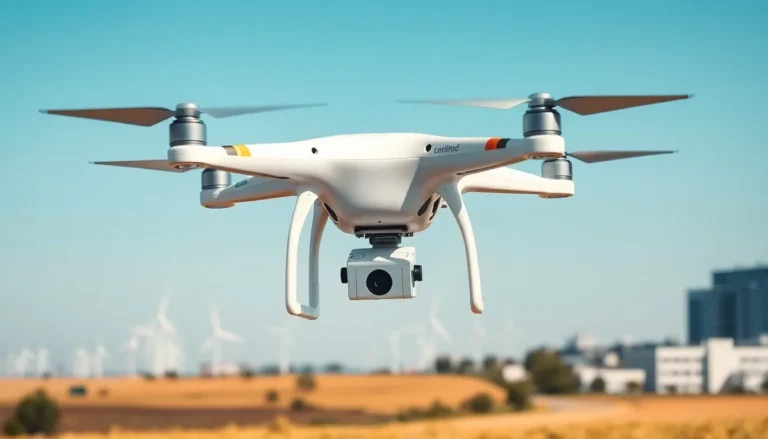


Drones trends 2026 point to a year of major shifts in how unmanned aircraft operate, deliver goods, and integrate into daily life. The drone industry has grown rapidly over the past decade, and 2026 is shaping up to be a turning point. Advances in artificial intelligence, battery technology, and regulatory frameworks are converging to push drones into new commercial and industrial roles. This article covers the key drone trends 2026 will bring, from smarter flight systems to expanded delivery networks and breakthrough applications across multiple sectors.
Table of Contents
ToggleKey Takeaways
- Drone trends 2026 highlight AI-powered autonomy, enabling drones to detect obstacles, adjust flight paths, and make decisions without human input.
- Drone delivery networks are scaling rapidly, with deliveries expected to account for 5-8% of last-mile logistics by the end of 2026.
- New BVLOS regulations from the FAA unlock long-range commercial operations, including deliveries and infrastructure monitoring without ground crews.
- Lithium-sulfur batteries and hydrogen fuel cells are extending drone flight times to 60-90 minutes, significantly expanding operational range.
- Agriculture, security, and infrastructure sectors are adopting drones to reduce costs, improve safety, and gain real-time data insights.
- Unmanned traffic management (UTM) systems are being deployed globally to coordinate drone flights and integrate them safely into shared airspace.
AI-Powered Autonomy and Smarter Flight Systems
Artificial intelligence is reshaping drone capabilities in 2026. Drones are becoming more autonomous, requiring less human intervention for routine tasks. Machine learning algorithms now enable drones to detect obstacles, adjust flight paths in real time, and make decisions without operator input.
One significant drone trend in 2026 is the rise of visual AI systems. These systems let drones identify objects, people, and terrain features with high accuracy. For example, inspection drones can now spot cracks in bridges or corrosion on pipelines without a human reviewing every frame of footage. The AI flags issues automatically.
Swarm technology is also gaining ground. Multiple drones can now coordinate their movements using shared data and AI-driven communication. This proves useful in search-and-rescue operations, agricultural surveys, and large-scale mapping projects. A single operator can manage a fleet of 10 or more drones working together.
Flight systems are getting smarter too. Drones in 2026 feature improved GPS alternatives, including visual positioning and lidar-based navigation. These systems allow reliable flight in GPS-denied environments like dense urban areas, warehouses, and underground facilities. The result is safer, more dependable drone operations across a wider range of settings.
Expansion of Drone Delivery Networks
Drone delivery is moving from pilot programs to widespread adoption in 2026. Major retailers, logistics companies, and healthcare providers are scaling up their drone delivery operations.
Amazon, Walmart, and Zipline have expanded their drone delivery footprints significantly. In the United States, drone delivery services now reach suburban and rural communities that previously faced long wait times for packages. Some estimates suggest drone deliveries could account for 5-8% of last-mile logistics by the end of 2026.
Medical deliveries represent one of the fastest-growing segments. Drones deliver blood samples, vaccines, and prescription medications to remote clinics and hospitals. In parts of Africa and Asia, drone delivery networks have become essential healthcare infrastructure.
The economics are shifting in favor of drones. Per-delivery costs have dropped as battery efficiency improves and flight automation reduces labor requirements. For lightweight packages under 5 pounds, drone delivery is now cheaper than traditional ground transport in many markets.
Urban drone delivery hubs are emerging as well. These facilities serve as launch points for last-mile deliveries in cities. Packages arrive by truck, then drones carry them the final stretch to customers. This hybrid model addresses range limitations while speeding up delivery times.
Evolving Regulations and Airspace Integration
Regulations are catching up to the drone industry’s growth. In 2026, governments worldwide are updating rules to accommodate increased drone traffic while maintaining safety.
The U.S. Federal Aviation Administration (FAA) has finalized rules for beyond-visual-line-of-sight (BVLOS) operations. This is a major milestone. Previously, most commercial drone flights required operators to keep the aircraft within eyesight. BVLOS authorization opens the door to long-range deliveries, pipeline inspections, and infrastructure monitoring without ground crews stationed along the route.
Remote identification requirements are now in full effect. Drones must broadcast their identity and location, similar to how aircraft use transponders. This allows authorities to track drones in real time and address safety or security concerns quickly.
Airspace integration is a key drone trend for 2026. Unmanned traffic management (UTM) systems are being deployed in several countries. These digital platforms coordinate drone flights, prevent collisions, and manage airspace in areas with high drone activity. Think of it as air traffic control for low-altitude operations.
Europe and Asia are implementing similar frameworks. The European Union Aviation Safety Agency (EASA) has established risk-based categories for drone operations. Japan and South Korea have introduced drone corridors, designated flight paths for commercial drone traffic in urban areas.
Advances in Battery Technology and Flight Range
Battery performance has long limited what drones can do. In 2026, new battery technologies are extending flight times and expanding operational possibilities.
Lithium-sulfur batteries are entering commercial production. These batteries offer higher energy density than traditional lithium-ion cells, meaning drones can fly longer on a single charge. Some industrial drones now achieve flight times of 60-90 minutes, up from 25-30 minutes just a few years ago.
Hydrogen fuel cells are another option gaining traction. Fuel cell-powered drones can fly for several hours and recharge in minutes by swapping hydrogen canisters. This technology suits long-range inspections, mapping, and surveillance applications where extended endurance matters.
Fast-charging infrastructure is improving too. Commercial drone operators can now recharge batteries in 15-20 minutes at dedicated stations. This reduces downtime between flights and makes continuous operations more practical.
These battery advances affect range directly. Delivery drones can now cover 15-20 miles round trip, up from 5-10 miles in earlier models. For industries like agriculture and energy, drones can survey larger areas without returning to base. This drone trend in 2026 makes many commercial applications economically viable for the first time.
New Applications in Agriculture, Security, and Infrastructure
Drones are finding new uses across industries in 2026. Agriculture, security, and infrastructure inspection are three sectors seeing rapid adoption.
Agriculture
Farmers use drones for precision agriculture at increasing rates. Multispectral cameras detect crop health issues before they become visible to the human eye. Drones spray fertilizers and pesticides with pinpoint accuracy, reducing chemical use by 20-30% compared to traditional methods. Autonomous drones now monitor fields daily, providing real-time data on soil moisture, plant growth, and pest activity.
Security
Security drones patrol commercial properties, borders, and critical infrastructure. AI-powered detection systems identify intruders, vehicles, or unusual activity. Drones respond faster than human guards and can cover more ground. Some facilities use drones that launch automatically when sensors detect a breach, providing live video to security teams within seconds.
Infrastructure
Infrastructure inspection is another area where drone trends 2026 are making an impact. Utilities, transportation agencies, and construction companies use drones to inspect power lines, bridges, cell towers, and buildings. Drones access hard-to-reach locations safely, eliminating the need for scaffolding or helicopter flights. AI analyzes inspection footage and generates reports automatically, speeding up maintenance decisions.
These applications share common threads: reduced costs, improved safety, and better data. As drones become more capable, more industries will find ways to put them to work.