
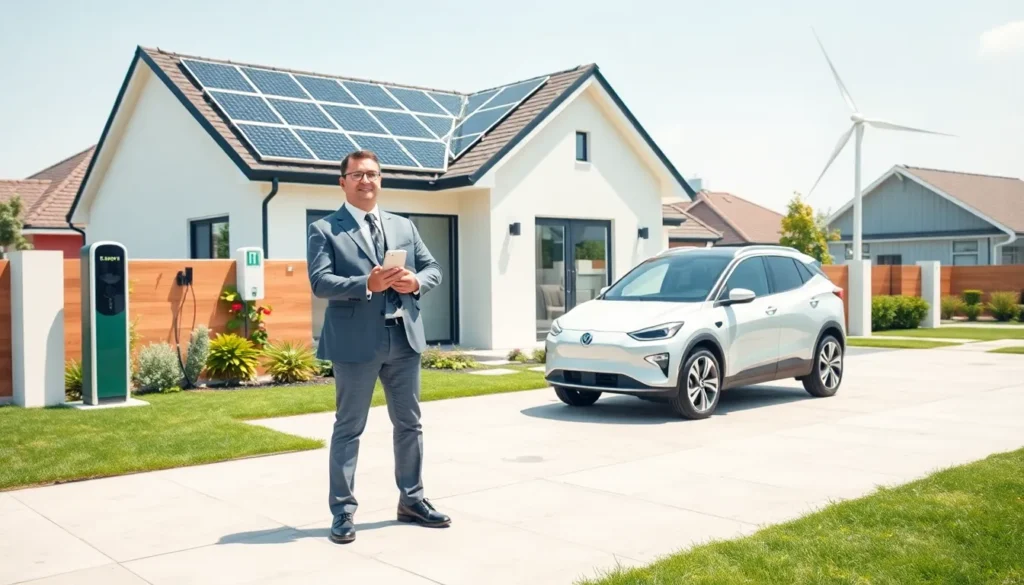

Top sustainable technology is changing how people live, work, and consume resources. From solar panels on rooftops to electric vehicles on highways, green innovations are gaining momentum across every industry. The shift isn’t just about environmental responsibility, it’s also about economic opportunity and long-term survival.
In 2024, global investment in clean energy reached over $1.8 trillion, according to the International Energy Agency. That figure signals a clear trend: businesses and governments recognize that sustainable technology offers real solutions to climate challenges. This article explores the most impactful sustainable technology innovations shaping a greener future, covering renewable energy, smart homes, green transportation, and sustainable agriculture.
Table of Contents
ToggleKey Takeaways
- Top sustainable technology spans renewable energy, smart homes, green transportation, and agriculture—driving both environmental and economic benefits.
- Global clean energy investment surpassed $1.8 trillion in 2024, signaling massive momentum behind sustainable innovation.
- Smart home systems like thermostats and LED lighting can reduce household energy consumption by up to 75% compared to traditional options.
- Electric vehicles now represent over 18% of new car sales worldwide, with expanding charging infrastructure making EV ownership more practical.
- Vertical farming and precision agriculture use up to 95% less water while reducing emissions and boosting food security.
- Adopting sustainable technology at any scale—from solar panels to e-bikes—contributes to meaningful carbon reductions.
Renewable Energy Solutions Leading the Charge
Renewable energy stands at the forefront of top sustainable technology advancements. Solar, wind, and hydropower have moved from alternative options to mainstream energy sources in many countries.
Solar Power Breakthroughs
Solar technology continues to improve in efficiency and affordability. Perovskite solar cells, for example, now achieve conversion rates above 25%, rivaling traditional silicon panels at lower production costs. Residential solar installations grew by 34% in the United States during 2023, driven by federal tax incentives and falling panel prices.
Wind Energy Expansion
Offshore wind farms represent another major sustainable technology success story. The United Kingdom generates enough offshore wind power to supply over 7 million homes. Meanwhile, floating wind turbines allow energy capture in deeper waters where winds blow stronger and more consistently.
Energy Storage Solutions
Renewable energy becomes more practical with better storage. Lithium-ion batteries remain popular, but newer options like solid-state batteries and iron-air batteries promise longer lifespans and greater capacity. Tesla’s Megapack installations now store grid-scale energy in California, Australia, and several European nations.
These renewable energy solutions demonstrate that sustainable technology can meet growing power demands while reducing carbon emissions significantly.
Energy-Efficient Smart Home Systems
Smart home systems represent practical sustainable technology that consumers can adopt today. These systems reduce energy waste through automation, monitoring, and intelligent controls.
Smart Thermostats and Climate Control
Devices like the Nest Learning Thermostat and Ecobee adjust heating and cooling based on occupancy patterns. The EPA estimates that smart thermostats save homeowners 8% on heating and cooling bills annually. That adds up to roughly $50 per year for the average household, and meaningful carbon reductions across millions of homes.
LED Lighting and Automation
Smart LED bulbs use 75% less energy than incandescent options. Combined with motion sensors and scheduling apps, these lights only operate when needed. Philips Hue and similar systems let users program lighting scenes that maximize natural daylight and minimize electricity use.
Home Energy Monitoring
Energy monitoring devices like Sense and Emporia track electricity consumption in real time. Homeowners can identify energy-hungry appliances and adjust usage habits accordingly. This sustainable technology turns abstract electricity bills into actionable data.
Water Conservation Tech
Smart irrigation systems like Rachio analyze weather forecasts and soil moisture to water lawns efficiently. Smart leak detectors catch plumbing problems before they waste thousands of gallons. These tools make water conservation automatic rather than effortful.
Smart home sustainable technology proves that small changes at the household level create substantial environmental impact when adopted widely.
Green Transportation Technologies
Transportation accounts for roughly 29% of U.S. greenhouse gas emissions. Green transportation technologies offer some of the most visible sustainable technology solutions available.
Electric Vehicles Take Center Stage
Electric vehicle sales surged globally in 2024, with EVs representing over 18% of new car purchases worldwide. Tesla, BYD, and legacy automakers like Ford and GM now compete fiercely in this market. Battery range anxiety has decreased as newer models regularly exceed 300 miles per charge.
Charging infrastructure is expanding rapidly too. The U.S. added over 30,000 public charging stations in 2024 alone. This growth makes EV ownership practical for more drivers.
Hydrogen Fuel Cells
Hydrogen fuel cell technology shows promise for heavy vehicles like trucks and buses. Toyota’s Mirai and Hyundai’s Nexo demonstrate that hydrogen-powered passenger cars work, though limited refueling stations remain a barrier. For long-haul trucking, hydrogen offers faster refueling than battery charging.
Public Transit Innovations
Cities worldwide are electrifying bus fleets and improving rail systems. Shenzhen, China operates an entirely electric bus fleet of over 16,000 vehicles. Europe continues expanding high-speed rail networks that compete with short-haul flights on speed and convenience.
Micro-Mobility Options
E-bikes and electric scooters provide sustainable technology solutions for short urban trips. Sales of e-bikes in the U.S. have tripled since 2019. These vehicles reduce car trips for errands and commutes while requiring minimal energy.
Green transportation sustainable technology directly addresses one of the largest sources of carbon emissions.
Sustainable Agriculture and Food Tech
Agriculture produces about 10% of U.S. greenhouse gas emissions. Sustainable technology in farming and food production addresses both environmental impact and food security challenges.
Precision Agriculture
Precision agriculture uses GPS, sensors, and data analytics to optimize farming operations. Farmers can apply water, fertilizer, and pesticides exactly where needed, reducing waste and runoff. John Deere’s autonomous tractors and drone monitoring systems exemplify this sustainable technology in action.
Vertical Farming
Vertical farms grow crops in stacked indoor layers using LED lighting and controlled environments. Companies like Plenty and AeroFarms produce leafy greens year-round with 95% less water than traditional farming. These facilities can operate near urban centers, cutting transportation emissions.
Alternative Proteins
Plant-based meat from companies like Beyond Meat and Impossible Foods requires significantly less land and water than beef production. Cultivated meat, grown from animal cells in labs, is advancing toward commercial viability. These sustainable technology innovations could reshape global protein consumption.
Regenerative Farming Practices
Technology supports regenerative agriculture through soil health monitoring and carbon sequestration tracking. Apps and sensors help farmers carry out cover cropping, reduced tillage, and rotational grazing more effectively.
Sustainable technology in agriculture tackles emissions while preparing food systems for climate-related challenges like drought and extreme weather.